
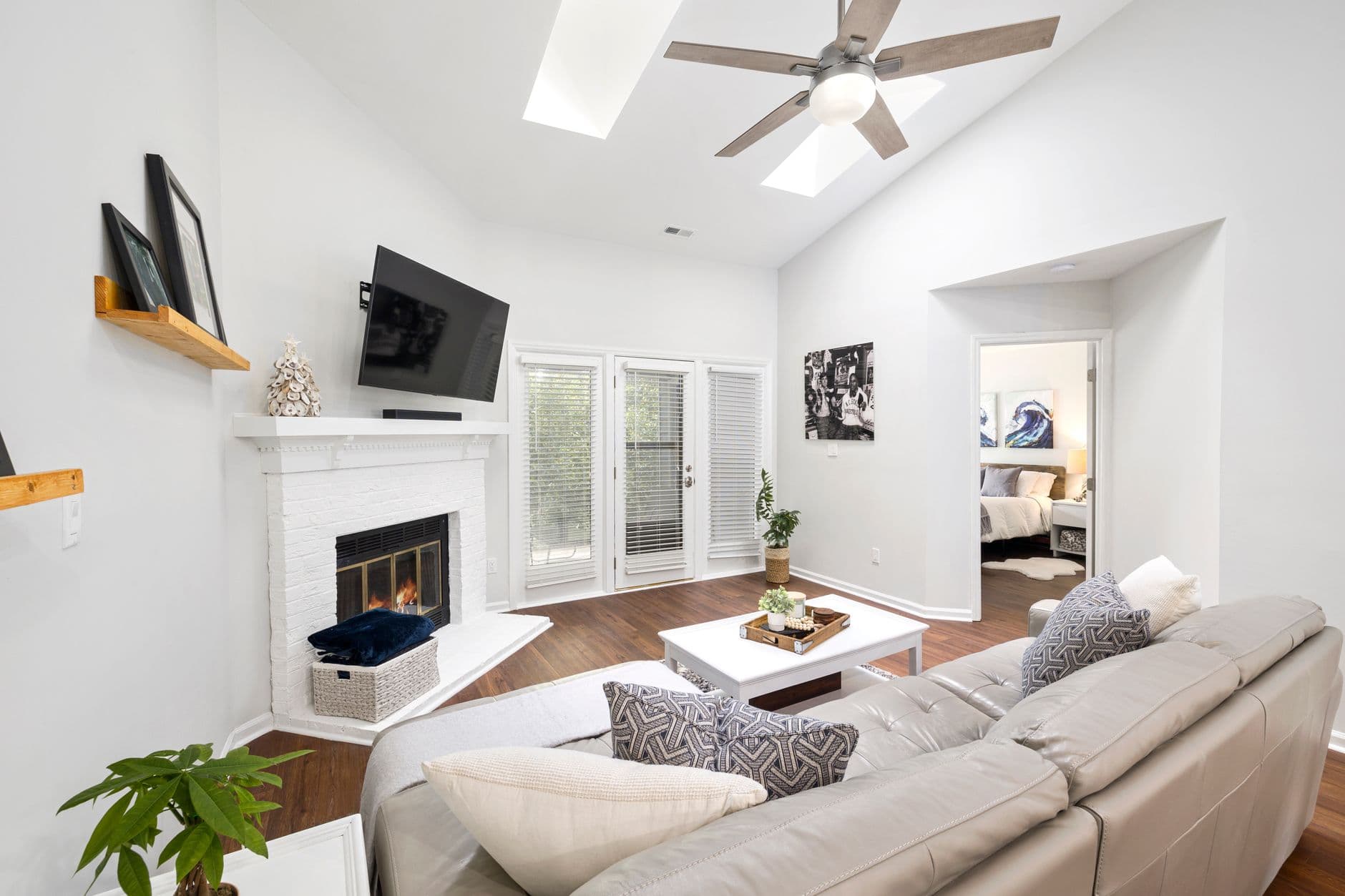

The Lease Covers the Dishwasher and Forgets the Fireplace
Pull up almost any standard lease template and you will find a paragraph on smoke detectors, a line about appliances, maybe something about the yard. You will rarely find a single sentence about a working fireplace, even though it is one of the few features in a rental that can genuinely start a fire if handled wrong. Who books the annual sweep? What happens if a tenant burns green wood straight off a curb pile? What is a tenant even supposed to do the first time smoke rolls back into the room instead of up the flue? None of that gets answered by a generic lease, and every one of those questions eventually turns into a phone call you were not expecting. Writing an actual fireplace policy for rentals across Thousand Oaks and Ventura County closes that gap before the first phone call happens.
Five Lines Worth More Than a Paragraph of Vague Reminders
Skip the generic "use with care" language and put these specifics in writing instead:
- - Who books and pays for the annual sweep, and how access gets arranged
- A hard rule that only seasoned, dry wood gets burned, since wet wood speeds up creosote buildup and raises fire risk
- What a tenant should do the moment they notice smoke, an odor, or anything else off
- Whether the fireplace is even usable if the unit has a wood stove or insert with its own operating quirks
- Where a tenant can check for a burn advisory before lighting anything

Writing it down removes the guesswork that eventually becomes a disagreement about who was supposed to know what.
Know What You Are Actually Renting Out
Before a new tenant signs, pin down what kind of fireplace you are actually dealing with, a factory-built unit rated for a specific fuel and clearance, or an older masonry setup built directly into the structure. The two age on completely different timelines and need different attention as a result. A lot of the newer housing stock around Thousand Oaks came in with prefab units, while the older homes out toward Ventura and Santa Paula are more likely to still have an original masonry firebox. Note damper condition, whether there are glass doors or just a screen, and any visible cracking, and attach photos to the file at move-in. That baseline protects the owner and the tenant equally if a condition question ever comes up down the line.
A Damper Is Not Obvious Unless Someone Explains It
Plenty of tenants have never touched a wood-burning fireplace before this lease. They do not know that leaving the damper wide open while a fire burns sends heated room air straight up the flue, or that skipping the open-damper step before lighting a fire is a real hazard, not a minor detail. A one-page instruction sheet dropped into the move-in packet heads off both problems at once: the safety issue of a closed damper, and the maintenance call that follows when a tenant assumes the fireplace is broken because the room never warms up.
Advisory Days Are Invisible Until Someone Tells a Tenant
Local air quality rules restrict wood burning on certain days, and a tenant who has never heard of that restriction is not going to check for it before lighting a fire. Put advisory information directly in the addendum, including where to check current status, and you cut down on both compliance headaches and the awkward call from a neighbor or an HOA about smoke on a day it should not have happened.
Access for the Sweep Belongs in the Lease, Not a Text Thread
Instead of negotiating sweep access fresh with every tenant every year, build a standard notice clause into the lease itself: a defined number of days notice, and the manager may schedule service. That single clause removes an entire category of back-and-forth and keeps the annual sweep from sliding just because one tenant was slow to respond to a message.
Handle Every Repair Request the Same Way
Smoke in the room, a stuck damper, a smell that will not go away, whatever the complaint, run it through the same triage process every time. Consistency here does two things: it keeps response time predictable across the whole portfolio, and it builds a record. A unit that generates the same complaint twice in a year is telling you it needs a real repair, not another routine visit.
Insert Decisions Should Not Be Made Property by Property in Isolation
An open masonry firebox in an older Ventura or Santa Paula rental can lose most of a fire's heat straight up the flue, and tenants notice even when nothing is technically broken. Whether to install an insert is really a portfolio question as much as a single-unit one, since it changes lease language, tenant expectations, and the ongoing maintenance profile for that property going forward. Deciding it consistently across similar units, rather than case by case whenever a complaint shows up, keeps the choice from looking arbitrary from one address to the next.
When a Tenant Genuinely Misuses the Fireplace
Every so often a tenant burns something they should not, overloads the firebox, or ignores a burn advisory entirely. A written policy referenced clearly in the lease gives you something to point to when a repair charge needs to be attributed to misuse rather than normal wear. Without that written standard already in place, separating normal use from misuse after the fact is a much weaker argument to make.
Revisit the Policy Whenever Ownership Changes
Any time a rental with a fireplace changes hands or moves to a new manager, review the addendum along with the rest of the lease instead of assuming the old policy still applies. A unit set up for wood burning might have been converted to gas at some point without anyone updating the file, or a fireplace marked decorative only might have been quietly reactivated by an earlier tenant. Checking current condition against what the lease actually says closes a gap that otherwise just carries forward unnoticed.
The Addendum and the File Need to Tell the Same Story
If the addendum says the manager handles annual sweeps, the maintenance file needs to show that sweep actually happened. If it says the tenant is responsible for reporting problems, the file needs to show what happened the last time a tenant did report one. A policy sitting only on paper, disconnected from what actually happens at the property, does not protect anyone once a dispute puts it to the test.
Make the Addendum Standard, Not Custom
Once you have written it, the fireplace addendum should go into every lease for a unit with a working fireplace across the portfolio, not get drafted fresh each time. Consistency is what makes it enforceable and easy for a tenant to understand, no matter which of your properties they end up renting.
Getting Units Assessed Before You Write Anything Down
Before you lock in your lease language, get an actual technician's eyes on the fireplace itself. Baker Family Chimney Contractors covers rental properties throughout the county, from Thousand Oaks out to Camarillo, Oxnard, Ventura, and Santa Paula, and can walk a whole portfolio in a batch rather than one address at a time. Call (805) 242-5120 to set that up, or to talk through whether an insert makes sense for an older masonry firebox somewhere in your properties.
Need Professional Chimney Service?
Our CSIA-certified technicians are ready to help with all your chimney and fireplace needs. Contact Baker Family Chimney Contractors today for expert service throughout the Ventura County service area.


